The Associated Press reviews a biz book with a flair for the dramatic:Monday, April 5, 2010
AP review: The End of Wall Street
The Associated Press reviews a biz book with a flair for the dramatic:Wednesday, July 29, 2009
A true mountain mystery
I went into the woods becauseI wished to live deliberately,
to front only the
essential facts of life,
and see if I could not learn
what it had to teach,
and not, when I came to die,
discover that I had not lived.
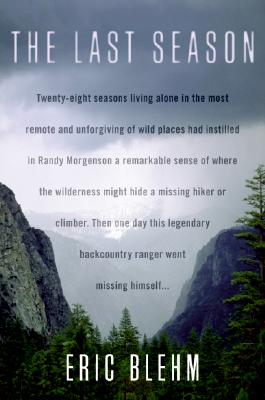
"The Last Season" (HarperCollins, 2007, 384 pp.), Eric Blehm's account of a missing backcountry ranger is captivating and sad, in the vein of Jon Krakauer's "Into the Wild."
Blehm details the life and ultimate disappearance of Randy Morgenson, a ranger in the wilds of California's High Sierra. Randy was raised in the Yosemite Valley by parents with a love of nature and of passing that reverence on to their children. Notably, and fascinatingly, guests at the Morgenson family dinner table included famed nature photographer Ansel Adams and his wife, Virginia, and writer and naturalist Wallace Stegner.
Randy turned a lifelong affinity for the mountains and nature into what seemed like the perfect life for him: Tending to a ranger station in the middle of nowhere in one of the country's largest national parks. He spent 28 summers manning a ranger station for the National Park System. But the solitary life proved taxing on his marriage, to a woman who seemed like a great fit for him: Judi would hike into the backcountry something like 18 miles just to spend time with him, and one year spent a happy winter season snowed in at a high-country station with him.
In the year preceding his July 1996 disappearance, Randy and Judi had a falling out. Randy, 54, had strayed with a female ranger and lied about it to Judi. She filed for divorce. He took the divorce papers with him that season to look over and presumably sign, and was in a noticeable funk to all those around him. The woman he had the affair with also moved on.
One day in July, Randy goes out on patrol and doesn't return. He leaves a note on his ranger station saying he'll be back. The rangers' radios were notorious for malfunctioning, so no one thought much about it at first when Randy was out of radio communication. But after 4 days, they organized an intensive search-and-rescue operation. After a thorough search involving dozens of rangers trained in searching, K-9 and helicopter searches of a vast amount of country, nothing turned up. No clues, nothing. Randy, who lived by the philosophy of preserving nature and not leaving a trace of oneself on it, was gone. Theories abounded that he'd done himself in, took off to Mexico, or perhaps was out there in the woods, injured.
Randy was a highly skilled hiker, extensively knew the country in which he was paid to patrol, and had a knack for finding injured or stranded hikers. That he would get himself into a life-threatening situation seemed unlikely to those who knew him best who were part of the search for him. Blehm plays to this theory. He includes others' accounts/corroborations of evidence of Randy's less than enthusiastic mental status the summer of his disappearance. The fact that Randy had written, at one point in his diaries, that "The least I owe these mountains is a body" seems prescient, foreboding.
So you read on, wanting to find out what became of Randy. And here's where this adventure tale seems to lag. The book is interesting, but parts of it (some of the myriad minute details) seem to stretch on unnecessarily.
A New York Times review questioned whether the tale had any legs beyond a magazine article. That's gotta smart for Blehm, a former editor of Transworld SNOWboarding magazine, who had written two books before this one: One about snowboarding ("P3: Pipes, Parks, and Powder") and one about a business ("Agents of Change: The Story of DC Shoes and Its Athletes"). "The Last Season" seems to be on a whole other intellectual level for Blehm, however.
Blehm's strength is in telling and interesting tale and completing the in-depth research he did to back it up. It may be his folly that it was not more throroughly edited.
Thatwithstanding, I enjoyed the descriptions of Randy's hikes in the backcountry and excerpts from his ranger logs and diaries. Blehm's descriptions of the beautiful isolated valleys and meadows Randy loved make you want to hop the nearest plane and go exploring there.
In addition to being about Randy Morgenson and what became of him, this book, a winner of the National Outdoor Book Award, is also about what it takes to be a backcountry ranger, a vocation that requires intense training and dedication, long absences from society, little glory, and for which the perks are decidedly not paid in money or respect from the NPS.
Blehm's book is a good summer read that will keep you up past your bedtime and will serve as a call to the wild for those of us currently camped in suburbia.
I will not spoil the book's ending by telling you the outcome.
Notably, Blehm is at work on a new book "The Only Thing Worth Dying For: How Eleven Green Berets Forged a New Afghanistan," which is due to be released in November 2009. I would expect nothing less than a riveting true adventure tale that is meticulously researched.
Thanks to Mercury Online Editor Eileen Faust, who has a yen for travel/adventure writing, for the loan of her paperback version.
Wednesday, July 1, 2009
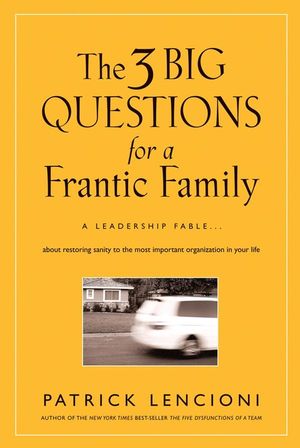
How 'bout running your family like you run your business?
Could your family benefit from being run like a business?Wednesday, May 6, 2009
Judging a book by its credentials

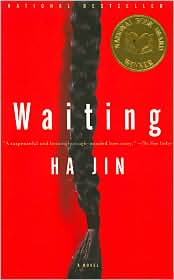
However, the story of the cultural revolution and its effect on Chinese society is this detailed novel's backstory. It is beautifully told by the native Chinese author in a spare manner.
Monday, April 20, 2009
A 'button-pushing, soon to be wildly popular novel'
Maybe everyone has a book in them, but not everyone should write a book.That's one of the lessons I learned attending the Publishing Institute at the University of Denver 6 years ago.

The program was designed to give people fresh out of college or those looking to change careers, as I was at the time, an in-depth look at the publishing industry. I did that while spending time in the beautiful and humidity-free Mile High City, where I could see the Rocky Mountains every day, and had the opportunity to hang out for most of the summer with my sister and her girls, who live there.
But anyway, at DPI, while not enjoying the weather, mountains, and my beautiful and hilarious nieces, we studied marketing, promotion, book cover design, literary agency, magazine and journal publishing, and sales, the big focus of the 6-week summer program was on editing and book publishing.
Book editors, in the course of their work, read a lot of duds. The volume of manuscripts that come across their desks is staggering. And much of it is crap.
To unearth a true gem of a book - a bestseller, even - in the slush pile (unsolicited manuscripts) is a very rare occurence indeed. Which is why authors must work with a literary agent to determine whether publication is feasible and, if so, to help them find someone to publish their manuscript.
Which is what makes it so remarkable for an author to have a first novel published. To have it quickly become a bestseller is rather astonishing.
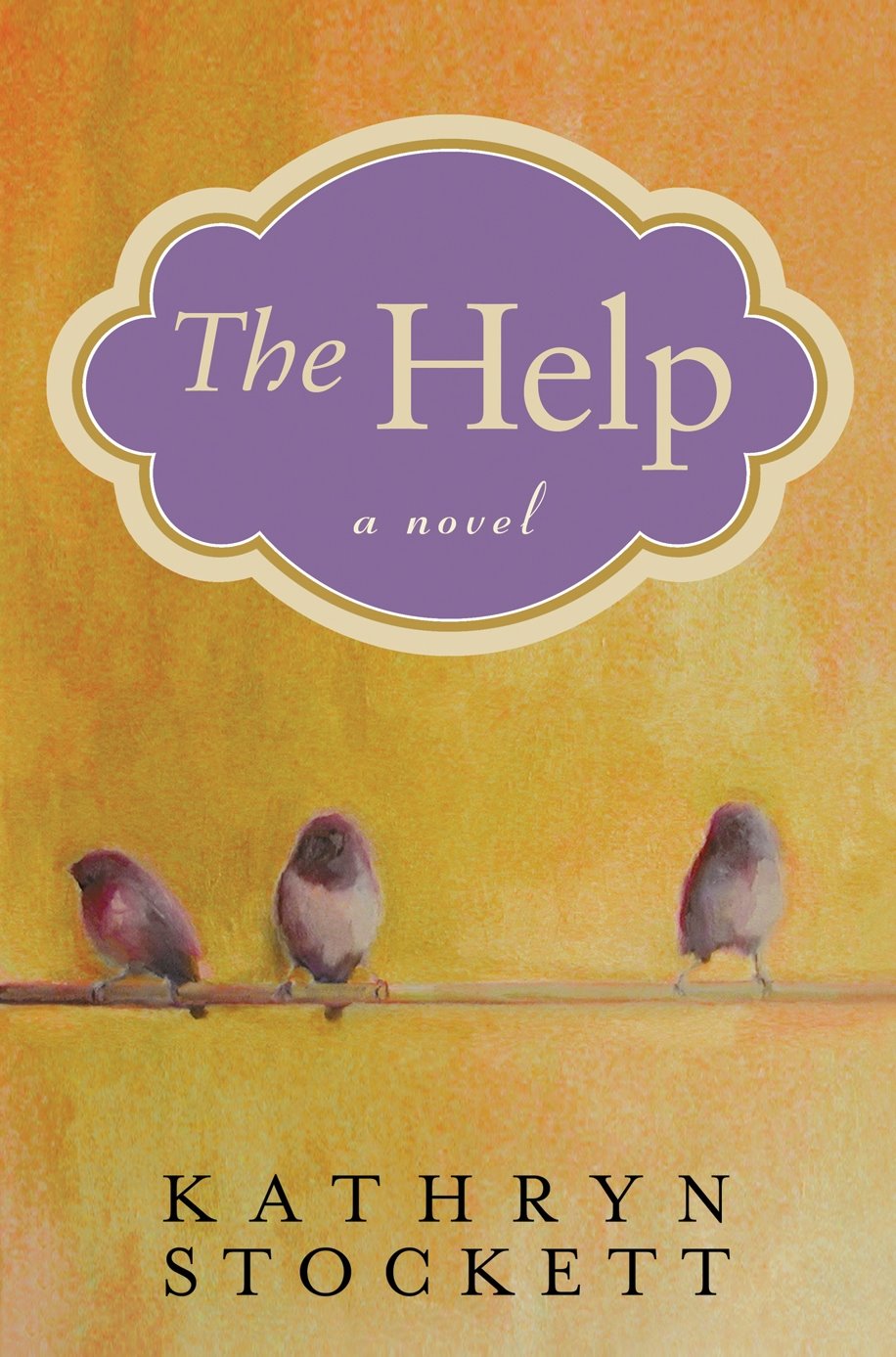
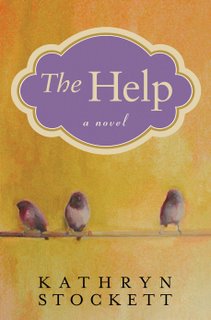
First-time author Kathryn Stockett, 39, did just that with her novel "The Help." But it wasn't as if Stocket just strolled up to the publisher and was handed a contract. She got 45 rejection letters from literary agents first. Forty-five. And perservered. And got a bestseller under her belt.
I haven't read "The Help," but after reading Chris Talbott's review of the novel for the Associated press (below), it's on my list...
First-time author scores unexpected best seller
By CHRIS TALBOTT
Associated Press Writer
JACKSON, Miss. — Good thing Octavia Spencer is an actress. She needed all her stagecraft to hide a horrified look when her friend, Kathryn Stockett, asked her to read her new novel, "The Help."
Stockett told Spencer she based a character on her.
"My face just got hot," Spencer says, "and I thought, 'What are you talking about?'"
It got worse. The character was a short, loud black maid who spoke in a Southern dialect and never seemed able to keep a job because of her big mouth, which didn't go over well in the white neighborhoods of Jackson in the early 1960s.
"And I thought to myself, 'If this is Mammy from 'Gone With the Wind,' I am just going to call her and tell her,'" she recalls. "I think by Page 3, I realized what she was doing and I realized how intelligent these women were.
"Oh, honey, to me it's an amazing journey."
Reactions such as Spencer's are becoming common as "The Help," Stockett's debut novel, creeps up the best-seller lists after an early February debut. The premise of the book usually causes an immediate visceral reaction, especially if readers know Stockett is white. After a few pages, though, most readers are hooked.
Entertainment Weekly reviewer Karen Valby called the book's backstory potentially "cringeworthy" before giving it high praise and an A-minus. Industry standard Publishers Weekly gave it a starred review and in The New York Times, Janet Maslin called "The Help" a "button-pushing, soon to be wildly popular novel." Positive vibes are viral on the Web.
"It's exciting to see someone get this kind of attention for a first novel," Stockett's agent, Susan Ramer, says. "This is very rare."
Not bad for a manuscript that was shunned as Stockett shopped it to agents. She stopped counting at 45 rejection letters, but kept at it until Ramer snapped it up after reading a few pages. What others didn't see — or care to read — was immediately evident to Ramer.
"Reading it, you say, 'I've got to have this,'" Ramer says.
She was able to sell the book in a matter of days. Publisher Amy Einhorn chose it to launch her own imprint at G.P. Putnam's Sons.
"We editors like to say that the books we publish are wonderful," Einhorn says. "If we're being truthful, the fact is books of this level don't come along often. Everything I keep hearing from people is, 'I can't believe that's the first book you launched your imprint with because it's so amazing.' It was kind of a no-brainer."
"The Help" tells the story of three women during the formative years of the civil rights movement in Mississippi, where it was dangerous to push the boundaries of segregation for both blacks and whites — though for very different reasons.
So when black maids Aibileen and Minny begin to work with a white woman named Skeeter on a book about their experiences as domestic help, they fear retribution ranging from firings to beatings. For Skeeter, an awkward, hairdo-challenged University of Mississippi grad who has never had a boyfriend until midway through the novel, the penalty is ostracization from normal white Jackson society; she is branded as one of those "integrationists."
In a sense, it's a story of the movement behind the civil rights movement. But it is much more. At turns hilarious and heart-wrenching, the story feels like a pitch-perfect rendering of a time when black people weren't even second-class citizens in a state where anti-integration forces fought back with both restrictive laws and violence.
The 39-year-old Stockett was born in 1969, a few years after the novel's events. Her family had a maid named Demetrie, who helped raise Stockett before Demetrie died in the mid-1980s. It wasn't until much later that the author got a better understanding of the climate in which she grew up.
"I was young and dumb," she said in a recent interview from Los Angeles where she was on book tour.
"I'm so embarrassed to admit this ... it took me 20 years to really realize the irony of the situation that we would tell anybody, 'Oh, she's just like a part of our family,' and that we loved the domestics that worked for our family so dearly, and yet they had to use the bathroom on the outside of the house.
"And you know what's amazing? My grandfather's still alive, the house is still there. Demetrie died when I was 16, and I don't know that anyone else has been in that bathroom since then."
It is the issue of separate bathrooms that spurs Aibileen to help Skeeter with her book. She wants to keep her job and her reputation as a skilled surrogate mother but she can no longer live with the idea that the woman whose children she raises thinks she carries diseases that white people don't.
The stories that Aibileen and her friends tell Skeeter are funny, sad, poignant and terrifying, and are filled with consternation at the contradictory ways — and prejudices — of white people.
Mary Coleman, a political science professor at Jackson State University who grew up in the rural Mississippi town of Forest, found the author's portrayal of the relationships between white families and their black help authentic.
"I grew up in a community where tons of mothers provided domestic help to white families and the twists and turns of life in a largely segregated town could be learned sooner rather than later if there was a relative who worked in a white home," Coleman says. "We grew up understanding that the world looks very segregated physically speaking, but the lines or walls weren't as high as people imagined because of these whispered conversations in white homes that were, in fact, later heard in black homes."
The book also rang true to Vickie Greenlee, a 66-year-old travel agency owner, who has been a member of the Junior League for decades. Stockett skewers the Junior League of Jackson in "The Help." Its president, Miss Hilly, serves as the book's antagonist and its members, though genteel, steadfastly reinforce segregation — she starts a project that all good white Jackson families have separate bathrooms for blacks, for example.
Greenlee says the Junior League is very different today, but that Stockett captured the times well — well enough to raise a few eyebrows when Greenlee suggested they choose "The Help" for their book club.
"In describing the book to them, a couple of them said, 'Oooh, I don't know,'" Greenlee says. "But when they read it, they thought she did an excellent job. A lot of that was very relevant. And the relationships with our maids, we felt like they were part of our families. Then again they didn't take issue with us or didn't question what we did."
Stockett had no idea anyone would ever read the book when she started. She began writing it while taking a break from her job as a magazine consultant in New York City shortly after the terror attacks destroyed her hard drive and her previous attempts at fiction, which began when she majored in creative writing and English at the University of Alabama.
"We couldn't e-mail, we couldn't even make a telephone call, a land line or cell phone, for about two days, so I just got really homesick and really it had been a lot of years since I had spoken to Demetrie," Stockett recalls. "I remember wishing that I could just talk to Demetrie and hear her voice again. So I started working on this story ... trying to escape the media and all the mess on TV. It started as a short story and just continued on and on from there."
Stockett is continually surprised at the reaction to the book. It's one of those rare books that gets pushed by both small booksellers and the big chains. It's No. 1 on the Southern Independent Booksellers Association list and edged onto The New York Times and Publishers Weekly lists two weeks ago.
"I think it's because of this word-of-mouth phenomenon because people begin engaging one another in discussions about how they grew up, what their feelings were about race differences in the '60s and whether or not they relate to this kind of story," she says. "I've gotten so many e-mails from readers who are sharing their stories."
Sunday, April 5, 2009
Clap if you believe in fairies

"What occurs in the world of the faerie will become manifest in the world of men"
Reviewed: "Godmother: The Secret Cinderella Story," by Carolyn Turgeon, Three Rivers Press, 2009, $13.95, 279 pp.
I’m a fan of novels that push envelope of the concept of "willing suspension of disbelief" by mixing reality with fantasy. Carolyn Turgeon’s latest novel, her second, "Godmother: The Secret Cinderella Story," does just that.
The enjoyable and quite readable fictitious tale follows Lil, an old woman who works her days away in a New York City bookshop while dreaming of returning to her youth as a fairy — yes, a fairy in the fashion of Peter Pan’s Tinkerbell, complete with wings and mystical powers. And Lil wasn’t just any fairy, she was the fairy chosen to be Cinderella’s fairy godmother.
But this is a Cinderella story that strays far from the innocuous, bubbly Disney version. At first glance at the book’s gorgeous cover, I thought maybe I could pass the book along to my 9-year-old niece, but as I read more changed my mind. I realized this is no light fairy tale, though it truly is the tale of a fairy. This fairy tale is more of the Grimm Brothers sort.
Lil is a tragic, heartbroken figure. She’s a person broken in spirit who hasn’t given up hope for redemption for past wrongs. She leads a double life: On one hand, she’s a knowledgeable bookshop assistant who ekes out a meager existence in a rent-controlled apartment; On the other, she’s a lonely, outcast creature who once did something so heinous as to lose the keys to the kingdom, so to speak.
Desperately, Lil wants to redeem herself — something she feels could possibly take her back to the fairy world, to the sister she lost at a young age and dearly misses.
The opportunity presents itself in the form of a good deed of sorts for Lil’s boss, a dashing Prince Charming of a bookshop owner who’s unlucky in love. Lil encounters and has an instant connection with Veronica, an artsy type who may the perfect young woman for him, at the shop and arranges for them to have a magical date to an actual society ball.
But the story is not as light and sweet as it may sound. There’s an underlying despair in Lil’s character, in her story. As much as we want her to be redeemed from her discgrace, we begin to doubt her credibility. But we are already, as they say, enchanted by this story.
Apparent are Turgeon’s sheer imagination, exquisite and colorful language and descriptions and ability to generate momentum within the story.
She reminds us that life, after all, is no fairy tale.
And though the world may be cruel, there is hope.
*Full disclosure: Carolyn Turgeon went to my high school (dear old State College Area Senior High School in State College, Pa.), graduating the year before I did. We were acquainted then, but didn’t stay in touch over the past two decades. I recently reconnected with Carolyn through a popular social networking site and was pleasantly surprised to learn she is a full-time author of marvelous and magical books (Her first novel, "Rain Village," went to print in 2006. Learn more at her website). Turgeon is quite the blogger as well: Check out The Astonishing Blog.
Wednesday, March 25, 2009
In a will, 'equal' doesn't always mean 'fair'

This Associated Press book review touches a topic I haven't: Wills and estate law.
In a will, 'equal' doesn't always mean 'fair'
By EILEEN AJ CONNELLY
AP Personal Finance Writer
NEW YORK — There's a lot more that goes into a will than directions on how to distribute an estate to your heirs.
Memories, resentments, regrets and greed are just some of the extras that get thrown into the mix. And even when families seem to have strong relationships before the will is read, anger and rage can bubble up if just one person believes that a will is unfair.
Les Kotzer, a wills and estate lawyer in suburban Toronto, has seen families damaged by fights over an inheritance. But people can avoid much of the pain by facing some truths while the will is being written, he said.
Parents should first recognize that "equal" doesn't always mean "fair." Splitting assets evenly between siblings may seem like the equitable way to divide an estate, Kotzer said. But when issues like how much parents contributed to the education of one sibling or the caregiving role of another are factored in, what's fair may be quite different from an even split.
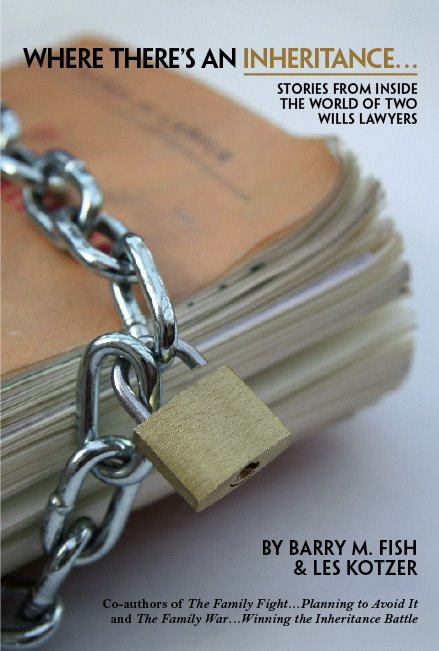
Kotzer also advises people to never assume that after they die, their children will work things out, especially when it comes to things like family heirlooms. His new book, "Where There's an Inheritance," co-written with attorney Barry Fish, tells stories of clients disagreeing over precious items, from a grandfather's piano to a family portrait. The hurt that remains when these emotional issues turn into legal battles can be devastating, Kotzer said.
"People have to recognize that fighting is not just over money," he said. Parents who want to help their kids avoid disagreements or make sure that personal effects go to certain people need to be specific. "It's important to work out a neutral solution."
Careful planning and communication can help solve problems before they arise. "It's about learning how to avoid the battles," Kotzer said. "You have to recognize what the aftermath of a family battle is."
Monday, January 5, 2009
When life gives you lemons, call it like you see it

Let me start off by saying: I don’t like to give negative book reviews, but sometimes there’s no way around it.
I will preface my review of Nancy Stampahar’s book "Peace, Love and Lemonade: A Recipe to Make Your Life Sweeter" by saying I acquired my review copy from the author under the assumption that I could treat what appears to be a self-help book as a business book, or at least apply it to business.
This book, however, is more like a pep talk for life, which comes as little surprise when we learn that Stampahar is a Pittsburgh-based motivational speaker.
The premise for "Peace, Love and Lemonade" (Silver Lining Solutions, 2008, $14.95, 175 pp.) is cute: A recipe for making your life sweeter. You start by choosing to "make lemonade" in your life. You take your "lemons" — aka the tough experiences in your life — remove the seeds (emotions of anger, fear, guilt and shame), harvest the "lighthearted zest" and sweeten with courage, assertiveness and passion. Blend with 1/3 cup each accountability, attitude and action.
Stampahar uses examples from her own life challenges and how she overcame them. A drug user and one-time high-school dropout, she had an epiphany after finally achieving her goal of earning her high school diploma: "I realized that if I make myself happy first, I can make others happy too."
Throughout, Stampahar informs the reader of other life lessons, incluing "You are the one person who is responsible for your life," and "No matter how tough our lives have been, we can reach ‘our greatness potential’," and "It’s never too late to get happy."
I’m afraid this short drink of "lemonade" is too sweet and Pollyannaish for me. It reminds me of an "inspirational" column that runs in The Mercury on Sundays that contains declaration after declaration of basically the same advice: "You can do it!" It’s tough to read because the paragraphs never go anywhere. It’s all, "You can do it!" and "Like I said before, you can do it!"
Likewise, Stampahar’s advice seems to be well-meaning, but is hard to swallow and, at times, a little scattered. Consider the following sentence from the chapter entitled "The Lighthearted Zest": "This would not be a true peace, love and lemonade book if I did not briefly share my live music experiences." Wait. What? She goes on to describe her love of collecting ticket stubs from concerts.
It seems Stampahar had a sound premise, but her execution suffers from saccacharinity. Such as the page on which Stampahar quotes the entire lyrics from the song Whitney Houston made popular in 1986, "The Greatest Love of All."
That’s where she lost me entirely.
Ugh.
Wednesday, December 31, 2008
Living within your means: Always a 'classic'

On the heels of a week's vacation to Colorado, my blog's getting cobwebs. Thanks to the Associated Press for bailing me out this once...
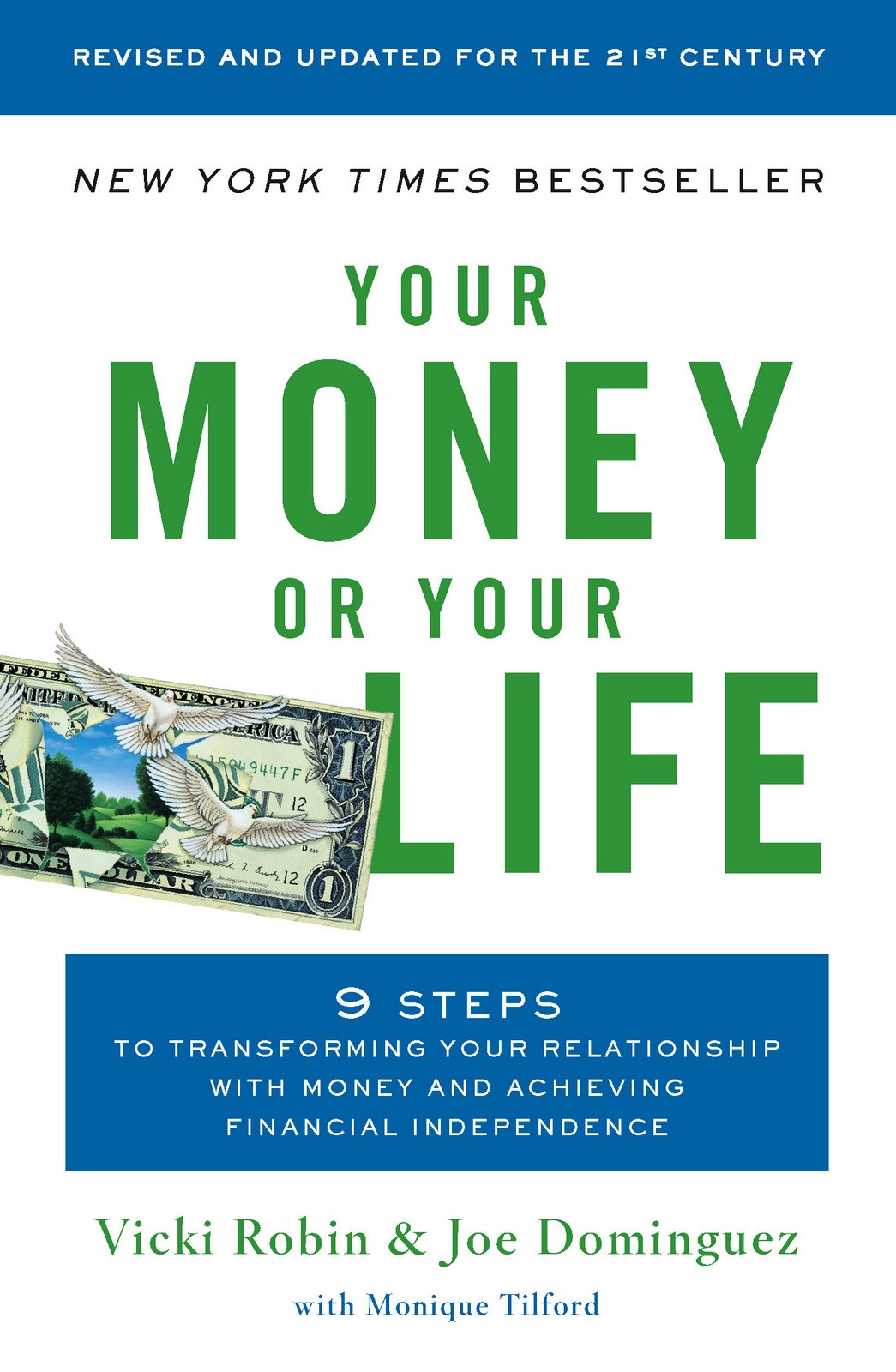
Revisiting a Classic: 'Your Money or Your Life'
By EILEEN AJ CONNELLY
AP Personal Finance Writer
NEW YORK (AP) — There are countless personal finance books that advise readers on budgeting, investing and paying down debt. Few leave the tips aside and ask you to question your relationship with money and the reasons you spend what you do.
"Your Money or Your Life," urges readers to re-examine everything about their financial lives through a less materialistic lens. Originally printed in 1992, the classic title has been updated and reissued at a time when the frugality it advocates might look much more appealing.
The book encourages readers to shed the viewpoint that more is always better, and offers nine steps that have the potential to help drastically reduce expenses and reshape the role that money plays in your life. Some of the steps are time consuming, like determining how much you've earned during your lifetime and producing an inventory of everything you own. And some, like determining your "real hourly wage" — by factoring in how much time and money you put into your job when you're not at work — can be eye-opening.
The Associated Press talked with co-author Vicki Robin about the philosophy behind "Your Money or Your Life," and what it has to offer in today's economy.
Q. Do you think the book's emphasis on living within your means has a new relevance in the current economic climate?
A. People have leveraged themselves to the hilt and are in shock that the system has let them down. I think the book provides a very helpful framework for people to take stock, and begin to track the flow of money and stuff in their lives, so they can get a clear picture of their relationship with money.
I don't mean to imply that people have been drunk, but in a way, debt has been sort of a binge. In the old days, we could binge all the way until we were out of money. With the advent of credit cards, we could binge with nobody watching. But what do you do when you wake up on Jan. 2 and realize you made a fool of yourself? You have to forgive yourself, take stock of where you are. You need to make some amends, and make some resolutions. I would really love it if people chose this moment to ask themselves where they are and where they want to go.
Q. You state that the nine steps outlined in the book can help reduce expenses an average 20 to 25 percent. How is that possible?
A. It is an enormous number, and I'm not saying that's the goal, I'm saying that's the result of paying attention. The book is about awareness, very precise awareness of what's going on.
The key to that reduction, is that when people determine their real hourly wage, on average they find that 20 to 25 percent of their nominal wage is their real hourly wage. Once people start paying attention to that, they start to look at the small, unconscious daily luxuries, and the bigger things. Every aspect of one's expenses comes into the "Is it worth it?" scrutiny, not necessarily the belt-tightening scrutiny.
Q. Is it really possible to convince people to step back from the consumer-driven idea that "more is better"?
A. The concept of "more is better" has been constructed by the industrial growth economy and aided and abetted by the advertising industry. Up until we were educated into more is better, we were naturally frugal because we understood that there's only a limited amount of stuff, and there's only a limited amount of needs.
I think this has been educated into us and I think we can easily educate it out of us. But politically and socially, it's going to be a tough row to hoe.
Q. Another concept you challenge is the idea that people define themselves by their jobs. What's wrong with identifying yourself through your work?
A. We're trying to break the stranglehold of identification with only compensated work. I think it dishonors the many other things that people do that are not compensated for financially.
There's many roles that we assume in life: sister, brother, mother, father, daughter, son, worker, community member, friend, volunteer. So we're just suggesting to not say I am a (profession) in such a way that it devalues the rest of your life. If you start valuing everything in your life, then you start realizing that your work is not everything. So you can make sure that you have enough hours of the day for other things that are important to you.
Q. Your book has been criticized as presenting a New Age, "hippie" or "tree-hugger" philosophy that many might find hard to embrace. Are you concerned that could limit its reach?
A. Christians have said it's a Christian approach to money. Buddhists have said it's a Buddhist approach. Frugal people have said it's an approach to frugality. I don't think it's New Agey per se, I think it's pragmatic.
Q. You don't give a lot of specific financial advice in the book. Does it contain anything for people who don't follow all nine steps?
A. Most people don't follow the whole program. But people frequently say it changed their life. One woman said she didn't realize until she did an inventory of her closet that she had many, many white blouses. She realized that every Friday after work, she'd go to the store and she'd buy herself a pretty blouse, because she "deserved it." If it's only that, if you read the book and wake up to a shopping habit, it's enough. Even if you stick a toe in the water, some realization happens. What we're simply trying to add to the conversation is that your own awareness of what makes you happy and what you spend your money on is important.
Thursday, December 18, 2008
"My Sister, My Love": decidedly not a fairy tale

Joyce Carol Oates, author of 37 novels, gets some material for her fictional accounts from the dark and twisted true tales of real life. And "My Sister, My Love," (2008, HarperCollins, 562 pp.) is no exception. (Before I go any further: This review contains spoilers!!)
The lengthy tale, told from the point of view often memory-impaired recovering drug-addict 19-year-old Skyler Rampike, and sometimes from his aching 9-year-old self, is based (not loosely at all) on some of the facts surrounding the murder of Boulder, Colo. child beauty pageant star JonBenet Ramsey (aka Bliss Rampike in this work).
JonBenet's murder in the basement of her family home around Christmas, 1996 was highly publicized. I'm sure you all remember it well. Her parents, the well-to-do John and Patsy Ramsey, were subsequently scrutinized by the "tabloid hell" of journalism.
JonBenet at the time of her brutal murder at 6 - but even as young as 4 - was a highly stylized, even sexualized, child star. Photos of her in myriad costumes and poses, like a little make-believe doll all, are all over the Internet, even 12 years later. I believe it was finally determined, through advances in forensic DNA processing, that it was indeed an outsider who broke into the Ramsey home and killed the innocent child.
However, her brother, Burke, who was 9 at the time of the murder, was looked at as a suspect for some time. So were his parents. Mother Patsy Ramsey died of cancer a few years back. (also echoed in this novel, but with a modern twist). Today, Burke has presumably gone on with his life. According to my Google results, Burke's now 22, living in Atlanta, with his dad.
But what was the boy's life like in the intervening years - the years between his sister's death and his becoming an adult? How did this family trauma and national attention affect him?
We can only speculate that it was beyond horrible.
Oates' interpretation shows the nice, obedient "Mummy's" boy (Skyler Rampike) reduced to rubble, mentally and physically. His parents, who had used their children as tools to climb the social ladder, cast him away after his sister's murder to whatever psychiatric hospital, drug rehab or private school for the troubled rich would take him). But not before his mother, Betsey, had planted the seed in his mind that HE had killed his sister. His father, the larger-than-life corporate figurehead Bix, never really giving him the time of day after it was determined the boy would not be a star athlete like his Big-Daddy. (Bix's aggressive parenting results in Skyler incurring an injury that will plague him lifelong for every step he takes).
So, through the novel, we sympathize with but also doubt and pity poor Skyler. We concede that it's possible he killed his beloved sister, who after all received more attention from the folks because of her skating prowess. He was jealous, we think.
But we are also introduced to the cold, one-dimensional parents who did little to help the troubled child after his sister was gone other than foot the doctors' bills. We wish Skyler could escape that life and find some peace. And in the end, we are left with a tiny bit of hope for that - even as Skyler is left standing at a crossroads of sorts.
Written partly from a child's perspective, and containing misspellings, handwritten items, and on almost every page - extensive footnotes, "My Sister, My Love" is Skyler's tool of catharsis. And though it is a long book (I had to renew the 14-day book for a second two-week run from Pottstown Library, to my chagrin), the ending is revelatory. It's not exactly an enjoyable read, but it does keep your attention.
Friday, December 12, 2008
New book now wowing Rowling fans worldwide - except me

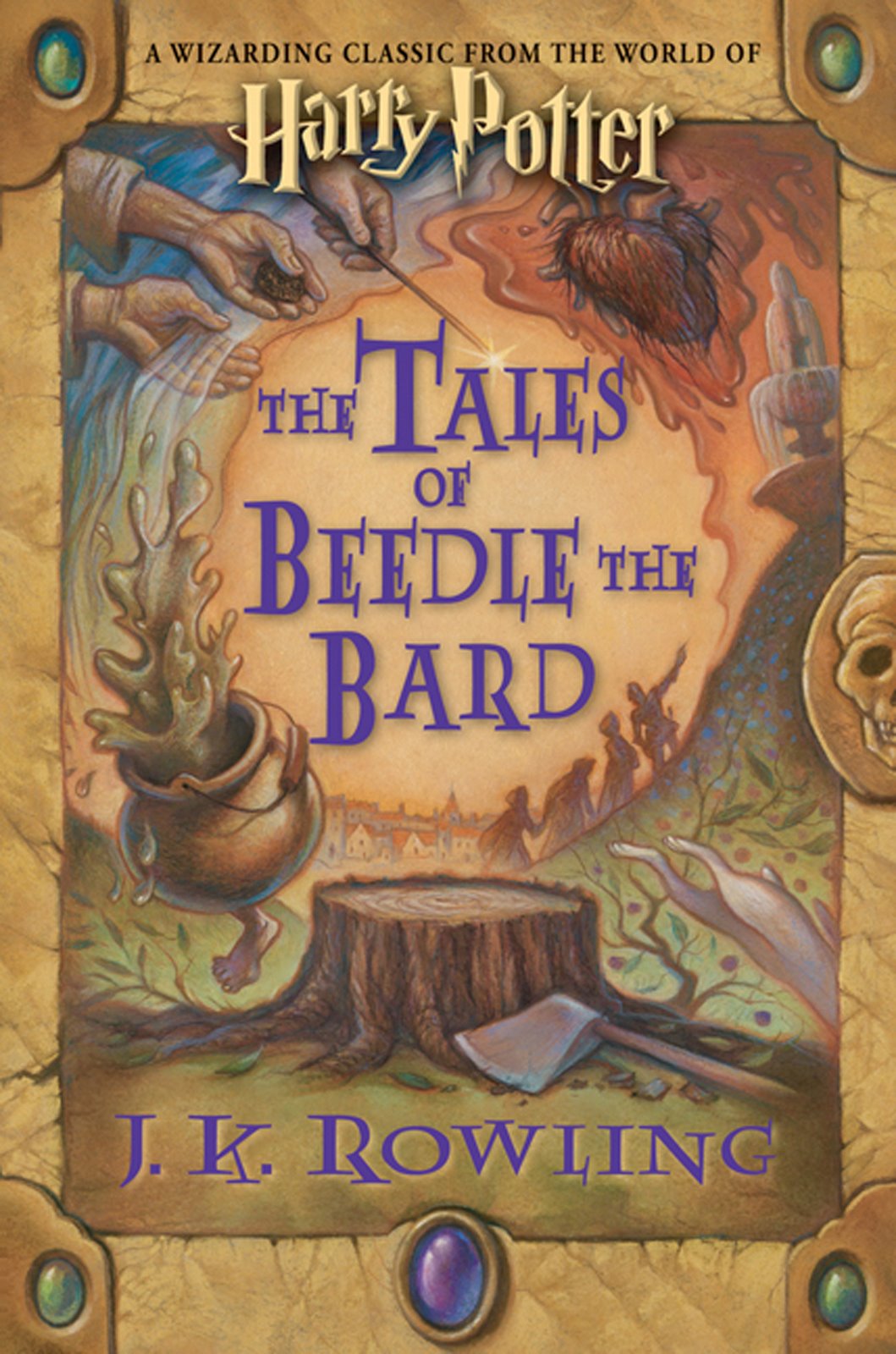
I'm pretty sure I'm the only person on the planet who never got swept away by the Harry Potter books. At the suggestion of Mercury Police Reporter Brandie Kessler, I read the first one. It was cute. I saw the movie. Also cute. But, and perhaps this shows my age, there are other ways I'd like to spend my time. I know Mercury Reporter Evan Brandt, author of The Thin Green Line blog, and his son Dylan read all the books together. That is adorable. Still, I don't need to read them. But for all of you Harry Potter fans out there, Rowling's latest, "The Tales of Beedle the Bard," is now flying off the shelves of a store near you. Just in time for the holidays.
New JK Rowling book goes on sale around the world
By Ben McConville
Associated Press Writer
EDINBURGH, Scotland — The latest magical tome by J.K. Rowling has started to fly off bookstore shelves.
Rowling launched "The Tales of Beedle the Bard" on Thursday with a tea party for 200 school children at the National Library of Scotland in Edinburgh, where she lives.
The author is donating royalties from the book to a charity, which hopes it will raise millions to help vulnerable children.
Recession-hit booksellers hope the book — a collection of five fables mentioned in Rowling's saga about boy wizard Harry Potter — will give them a festive boost
"We expect it to come straight in at No. 1 and is very likely to be our No. 1 book this Christmas," said Jon Howells of Britain's Waterstone's book store chain. "It's in with a fighting chance of being the best-selling book of the year, even though there are only a few weeks to go.
"This is J.K. Rowling. None of the usual rules apply," he said.
"Beedle the Bard" is being published Thursday in more than 20 countries, with a global print run of almost 8 million. But is generating only a fraction of the fanfare that greeted the Potter novels.
Rowling is donating her royalties to the Children's High Level Group, a charity she co-founded to support institutionalized children in Eastern Europe. The book is published on behalf of the charity by Harry Potter's traditional publishers — Scholastic in North America and Bloomsbury elsewhere.
Rowling, whose Harry Potter books have sold more than 400 million copies and been translated into 67 languages, wrote the Beedle tales after finishing "Deathly Hallows" last year.
One of the stories, "The Tale Of The Three Brothers," is recounted in "Deathly Hallows," in which the storybook helps Harry and his friends defeat evil Lord Voldemort.
Rowling has described "The Tales of Beedle the Bard" as a distillation of the themes found in the Harry Potter books, calling it her goodbye to a world she lived in for 17 years.
The book was initially produced last year in an edition of seven handwritten copies. Six were given away by Rowling as gifts, and one was bought by Internet retailer Amazon at an auction for almost 2 million pounds ($3 million).
Rowling told the schoolchildren at the launch that she published the book after complaints from readers over the sale.
"There was quite a lot of high feeling from Harry Potter fans that only someone who had 2 million pounds could afford to read the book," she said. "I thought: 'fair point,' so I thought I'll publish it and then the charity can have that money too."
Rowling read a passage from the tales to her young audience, which was given free copies of book.
Amazon is printing 100,000 copies of a leather-bound collectors' edition priced at 50 pounds, or $100 in the United States.
Friday, November 21, 2008
If you’re dealing with difficult employees, this book makes some helpful suggestions
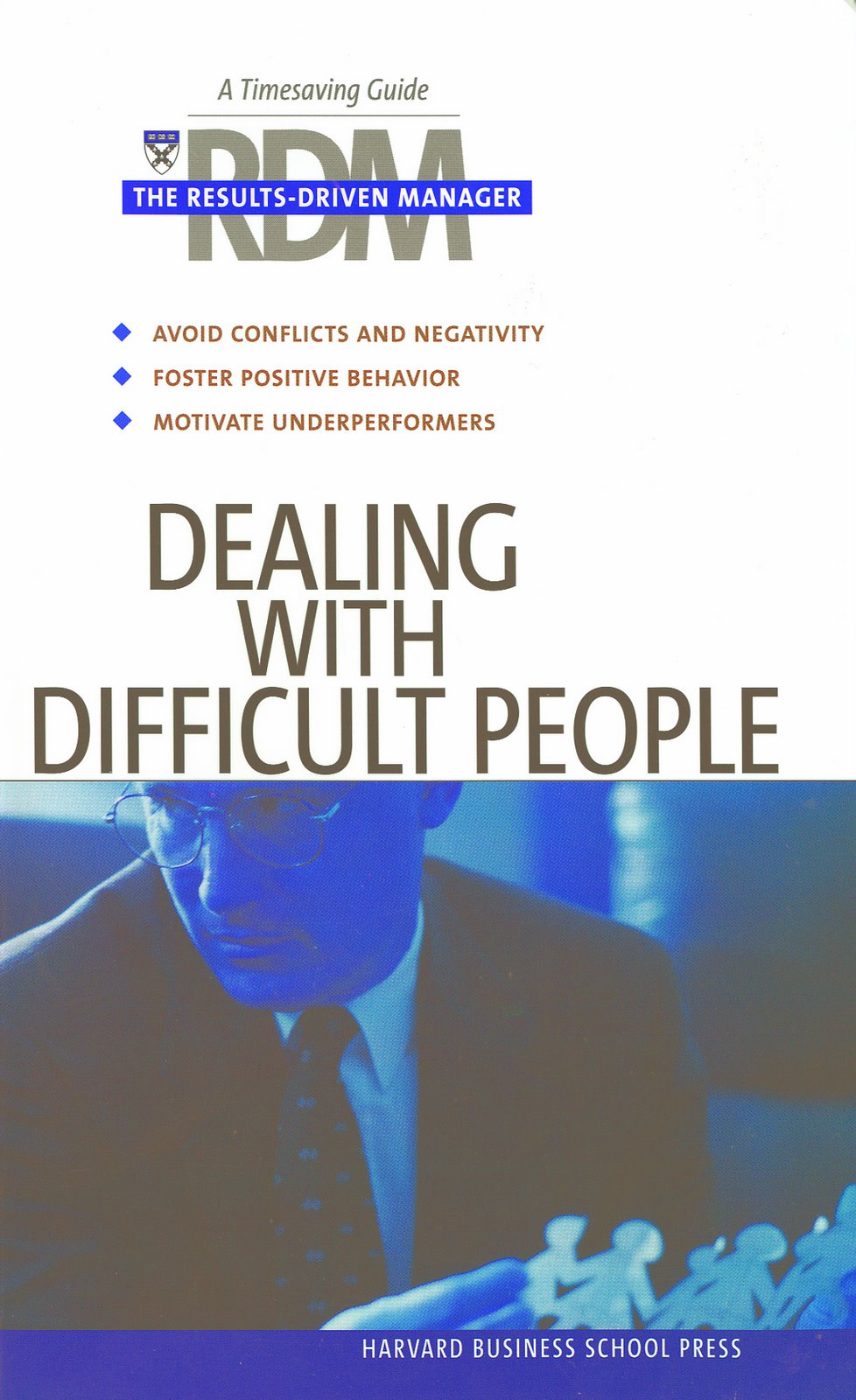
Reviewed: “Dealing with Difficult People,” from The Results-Driven Manager series, Harvard Business School Press, 2005, $14.95, 139 pages.Managing conflict at work is kind of like Kenny Rogers says in “The Gambler”: “You’ve got to know when to hold ’em. Know when to fold ’em. Know when to walk away, and know when to run.”
Learning what to do — as a manager — during disputes in the workplace is the topic of “Dealing with Difficult People,” a tidy little collection of articles from the “Harvard Management Update” and the “Harvard Management Communication Letter.”
Full of short and to-the-point articles and helpful suggestions, the slim book is a guide for senior to middle managers for dealing with difficult employees. It offers useful information for management types as well as anyone who needs to brush up on conflict resolution in the workplace.
As someone who avoids conflict like the plague, I particularly enjoyed the chapter called “Don’t Just Do Something — Sit There.”
“If a dispute doesn’t interfere with an employee’s performance, does not disrupt the work environment, and is not a violation of company policy, then ‘benign neglect’ is probably a suitable approach for a manager,” said David Lipsky, director of the Institute of Conflict Resolution at Cornell University.
Managers should look at such situations as “an opportunity for your staff members to develop their problem-solving skills.”However, the book notes, there are certain situations in which a manager should definitely intervene:
•When the disagreement is between an assertive employee and a timid, less vocal person.
•When an argument between two employees has broadened to encompass additional staff members.
•When the conflict involves illegal conduct, such as sexual harassment or civil rights violations.
However, the laissez-faire approach to management isn’t always the best tack, per the chapter “Don’t Avoid Conflicts — Manage Them”“Ducking conflict,” Monci J. Williams, author of the chapter, advises, “may actually make it harder for us to achieve our goals.”Managers, when they see a conflict brewing, “may notice that both parties repeatedly assert their own needs and wishes, and tell each other why the other guy is wrong. The experts call this the ‘attack/defend spiral,’ and it’s where most of us flame out.”
The solution, according to the Harvard experts, is to use “neutral ‘opening’ and ‘informing’ statements to encourage the other person to open up. Comments such as ‘I know we’ve both been very concerned about X, but I also know that Y is very important to you; I’d like to understand that better’ encourage the other person to talk about her concerns and wants.”
(But doesn’t that take for granted a civilized and polite workplace?)
Also noted is “When to Walk Away from a Fight,” in a chapter written by Rebecca M. Saunders.
During a work-related argument, “If the other person is fidgeting, leaning forward, or shaking a finger in your face, then back off politely,” Saunders writes. “If both parties insist they are right and refuse to back down, the cost can be high — angry words and hard feelings that never go away can make the workplace unpleasant for everyone.”
It’s important to “take a breath and decide if it’s worth escalating or not,” she said.
And, like “The Gambler” says, “Now every gambler knows that the secret to survivin’ is knowing what to throw away and knowing what to keep.”Remember to play your cards right when dealing with difficult folks at work.
I love a good poker metaphor.
Friday, November 7, 2008
The witches redux
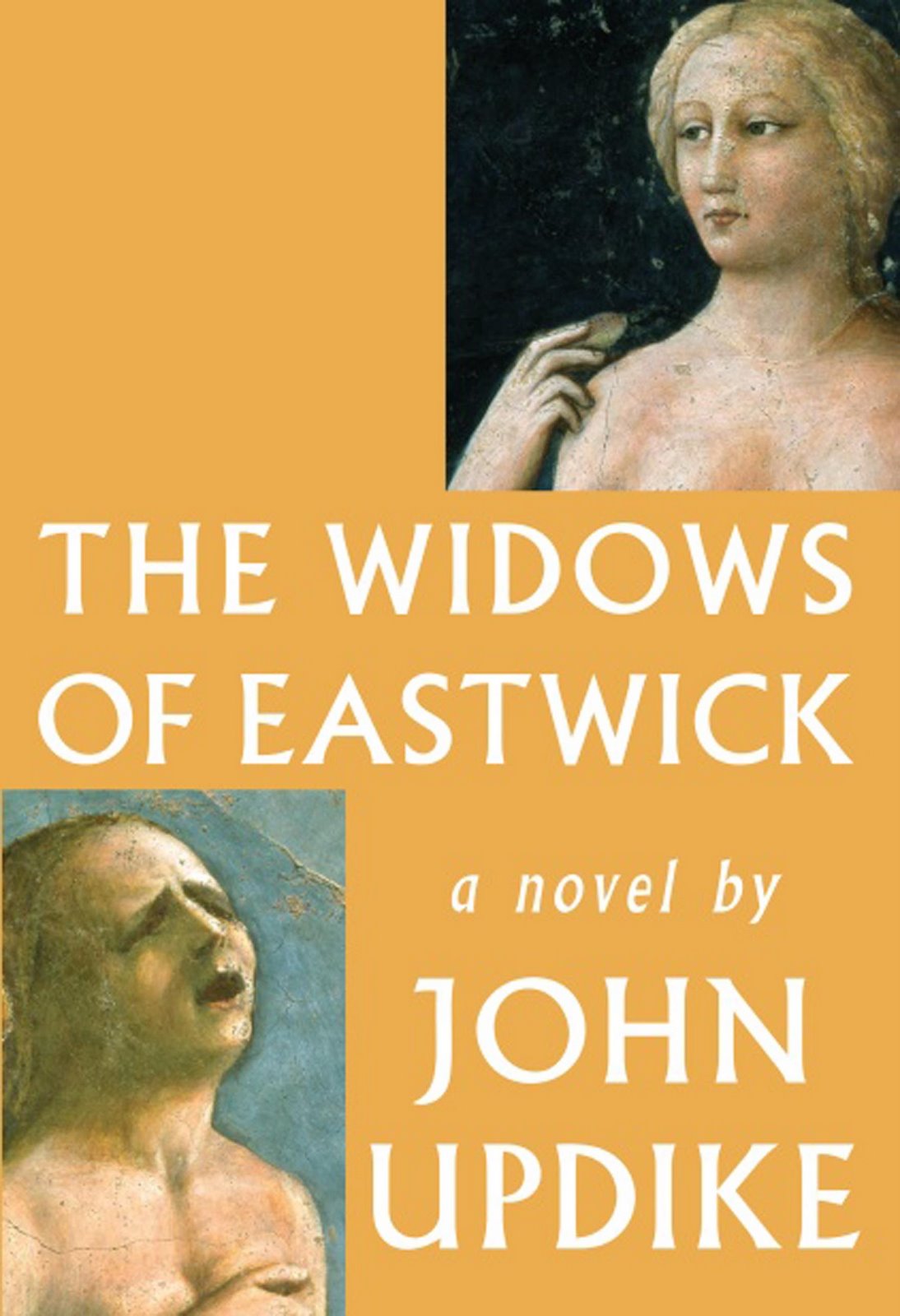
"The Widows of Eastwick" (Alfred A Knopf. 308 pages. $24.95), by John Updike: Even the most wicked witches age. And, as it turns out, a sorceress' decline is by turns as painful, lonely and even common as that of any unmagical being.
The aura has vanished from the three witches of Eastwick that John Updike crafted in a wondrous, taboo-filled novel of the same name 24 years ago. In its sequel, "The Widows of Eastwick," Alexandra, Jane and Sukie are still here but, like the author, they are fading — and sometimes gracelessly.
All three are widows now. Having long ago fled the bedlam they left behind during the ill-fated pursuit of Darryl Van Horne in seaside Eastwick, R.I., the once rollicking coven slowly reconvenes, bonding over their mutual losses but mostly reliving past debauchery.
Since they left Eastwick, contact among the three has faded. Alexandra retreated to the southwest, living remotely with a sculptor husband. Jane moved with her own beau to Connecticut, remaining sharp and cynical. Sukie, once Eastwick's gossip columnist, married a wealthy man and became a second-rate romance novelist.
They take steps to dull their pain, such as they feel it. Alexandra, the most emotive and mournful of the trio, travels to Canada alone, then to Cairo with Jane, who has maintained more of her wicked edge and is less apologetic about the past. When Sukie's husband dies, she joins the ladies in their travels, falling somewhere between on the emotional scale.
If it sounds melancholy, it is. All the reunions feel forced: The witches with each other and then later, inevitably, with Eastwick; Updike with the protagonists and their sexual exploits; the reader with the whole bawdy ensemble.
What's odd is that Updike seems to know this. It seems even to be the point. This is supposed to be sad, regretful. His typically descriptive prose is forlorn throughout.
It's a tone he sets early, as when he describes Alexandra's discovery of her husband's cancer:
"They had joined the legion of elderly couples who fill hospital waiting rooms, as quiet with nervousness as parents and children before a recital. She felt the other couples idly pawing at them with their eyes, trying to guess which of the two was the sick one, the doomed one; she didn't want it to be so obvious."
The plot of "Widows" moves slowly, like an aged thing. Even this feels fairly deliberate. Decline is never as rapid as we'd hope, Updike seems to intone. We have too much time to look back, and that can punish. Even the witches seem to get it:
"How lovely, being remembered," Sukie says to Alexandra at one point. Alexandra's reply says it all: "It can be, or not."
Updike, of course, need not worry about being remembered. He will be recalled fondly — though probably not for this novel. One of the most prolific and gifted writers of his generation, he has nothing left to prove.
There are moments of brilliance, but he, like the witches, is ebbing.
Toward novel's end, Alexandra speaks to the daughter of a former lover, Joe. It's an apt coda — whether intentional or not. (With Updike, one always suspects intent.)
"'How has it been for you,' she asked. 'Being in Eastwick for this summer?'
"'It was ... useful,' Alexandra decided. 'It confirmed my suspicion that I belong elsewhere. There was less here than I remembered.'"
Wednesday, September 3, 2008
Another non-biz book: The River King by Alice Hoffman
The River King by Alice HoffmanMy review
rating: 4 of 5 stars
I've been a fan of Alice Hoffman's mysterious, magical fiction since high school when I read Turtle Moon - borrowed from my sister's library.
The River King didn't disappoint. Hoffman's lyrical prose drew me in to a story about an enchanted Massachusetts boarding school and the suspicious death of an outcast student in the nearby river.
The appearance of watery ghosts, charmed fish and vengeful black cats were not surprising, given Hoffman's penchant for bringing the otherworldly into the everyday.
But also this is a love story, and not just of one couple. An engaged teacher and a lonely cop get together and sparks fly. A beguiling swimmer and a boy from the wrong side of the tracks. Passion triumphs over reason.
A good read. I plowed through the last half of the book in one night. This book missed a fifth star because I was disappointed with how tidily and hastily the book ended. I would've liked to learn more about the lovers, the townsfolk, the dead boy's final resting place.
.
Thursday, July 31, 2008
Rather, the myth of the great man
The Great Man: A Novel by Kate ChristensenMy review
Rating: 4 of 5 stars
This novel is not about a great man at all, but the strong, unique and falliable women who surrounded a celebrated but morally weak artist in his life.
After the artist's death, his sister, his wife, his mistress, his grown daughters and his mistress's best friend are reminded of their time with him through the eyes of two biographers writing about him.
Sometimes comical, often biting, The Great Man gives us female protagonists who are grandmothers, or old enough to be grandmothers. And their voices are anything but tedious.
Monday, July 28, 2008
Simple steps to a greener home
•Take a shorter shower. Every two minutes you save can conserve more than 10 gallons of water.
•Set your thermostat a degree higher for air-conditioning and a degree lower for heating. You could save $100 per year on your utility bill. Keep adjusting and you’ll save even more.
•Compost. Keep your kitchen scraps from fruits, vegetables and coffee grounds in a composting container. Try adding them to your garden or starting a compost site in your yard. You’ll grow a better garden, create deeper topsoil, recycle nutrients and save landfill space.
•Don’t pre-rinse dishes. Run full loads in your dishwasher and save energy, and don’t pre-rinse dishes before putting them in. Do both and you’ll save up to 20 gallons of water per dish load, or 7,300 gallons over a year — that’s the same amount of water the average person drinks in a lifetime.
•Clean the microwave. Keeping your microwave clean will maximize its energy. Microwaves are up to 4.8 times more energy efficient than traditional electric ovens. If it costs 10 cents to cook an item in the microwave, it would cost 48 cents to cook the same item in a standard oven.
•Use glass containers. Instead of using plastic, store your food in glass or porcelain containers. Fewer chemicals will likely leach from the container into the food.
•Water filters. Try installing water filters on your home faucet instead of buying bottled water. You can buy a walter filter for as little as $29 - about the same cost of a month of bottled water.
•Rid yourself of junk mail. The average U.S. household received 1.5 trees’ worth of junk mail each year. To reduce the amount of junk mail you receive, visit www.dmaconsumers.org/cgi/offmailing list
•Light bulbs. Dust your light bulbs and change them to compact flourescent when they burn out. You’ll increase energy efficiency and light output.
•Choose matches over lighters. Over 1.5 billion plastic lighters end up in landfills yearly. Cardboard matches, made from recycled paper, are a better choice than wood matches, which are made from trees.
•Filters. Instead of having to replace your disposable air filter several times a year, consider buying a permanent one that can be washed and reused indefinitely.
•Dry cleaning. Request no plastic bags, and return you paper hangers to the dry cleaners for recycling.
•Get rid of lint. Clean your dryer lint screen, and don’t overload the dryer. You’ll save up to 5 percent on your electricity bill. Better yet: Use a clothesline when possible.
•Wrap your water heater in an insulating blanket to store heat. Set the thermostat no higher than 120 degrees to conserve energy.
•Wash your car in a commercial car wash. It is better for the environment than doing it yourself. Car washes use less water per wash — up to 100 gallons less — and often recycle and reuse rinse water.
•Hoses. Fit your garden hose with an automatic shut-off nozzle. You’ll save up to 6.5 gallons per minute.
•Lawn care. Cut your gras so it’s two inches high, and leave the clippings on the lawn. You’ll spend less time mowing and raking, and you won’t have to water your lawn as much.
•Download music instead of buying CDs. The average price of a CD is about $15, while a downloaded album is about $10. Each month, more than 45 tons of CDs end up in landfills.
•Soda. Buy from the fountain in a paper cup rather than from a can or plastic bottle. More paper (48 percent) is recycled than are cans (43.9 percent) or plastic soda bottles (25 percent).
•Go high-speed. Faster Internet access saves time, and ultimately money and energy. Based on a full day’s use, you could save more htan $30 per year in energy costs by increasing your Internet efficiency and turning off your computer when it’s not in use.
•Don’t take an ATM receipt. ATM receipts are one of the top sources of litter on the planet.
•Direct deposit your paycheck. You will get your money faster and will reduce the time and fuel you used to get to the bank.
•Pay bills online and sign up for paperless bank statements. Save postage and paper.
•RECYCLE. We could decrease the amount of waste sent to landfills by 75 percent if everyone in America simply separated the paper, glass, and aluminum products from the trash and put them in the recycling bin. Currently, it takes an area the size of Pennsylvania to dump all of our waste each year.
To learn more about ways to save the environment, visit award-winning Senior Mercury reporter Evan Brandt's blog The Thin Green Line.
To purchase "green gifts" including the book mentioned in this blog, visit The Green Perspective
Sunday, June 22, 2008
The Mermaid Chair by Sue Monk Kidd
The Mermaid Chair by Sue Monk KiddMy review
rating: 3 of 5 stars
Though it was well-written with Kidd's Southern charm shining through, this novel lacked the magicality that "The Secret Life of Bees" held for me. Not un-worthwhile. A good beach read, I'd imagine. I still find it hard to believe that a woman would leave her seemingly wonderful husband to go roll around in the mud with a hot monk (and that a hot monk was just, you know, willing and available).
View all my reviews.
Friday, June 13, 2008
‘Life lessons’ may not solve the mysteries of the universe, but could give you a chuckle

Knowing when to shut up, according to author Michael Staver, is a lost art.
Monday, June 2, 2008
Unaccustomed Earth
Unaccustomed Earth by Jhumpa LahiriMy review
Because there's more to life than business books, and because I read more fiction than books of the business variety, today I'm trying something new and posting a review of my latest read fiction, a book of stories by Jhumpa Lahiri (2008 by Knopf Canada, 224 pages).
Also, I'll plug my online book club here, which contains my reviews of both regular old books and business books. It's a great way to find new books to read.
Check out my reading list on Goodreads - where you can see what your friends are reading:
http://www.goodreads.com/friend/i?i=LTM2MDcwNTQzNDA6MjU3%0A
Like Lahiri's first collection of stories, The Interpreter of Maladies, each intricately-woven tale is like a gorgeous jewel that you feel you're the first to discover. The theme of "unaccustomed earth" - of families displaced and children who grow up torn between two cultures - pervades each of the stories, none of them very short. I liked that the last three stories are linked and are told from the viewpoint of a girl and boy who meet in childhood then later as adults. It's comforting, compelling to travel with them through the sometimes painful parts of their lives, to meet up with them again, years older, in the next tale. Even if, and especially if, there is no happy ending.
Lahiri's writing is unexpected, rich and stunning. I can't wait 'til her next book.
View all my reviews.
Friday, January 25, 2008
'Miserable' doesn't describe this book

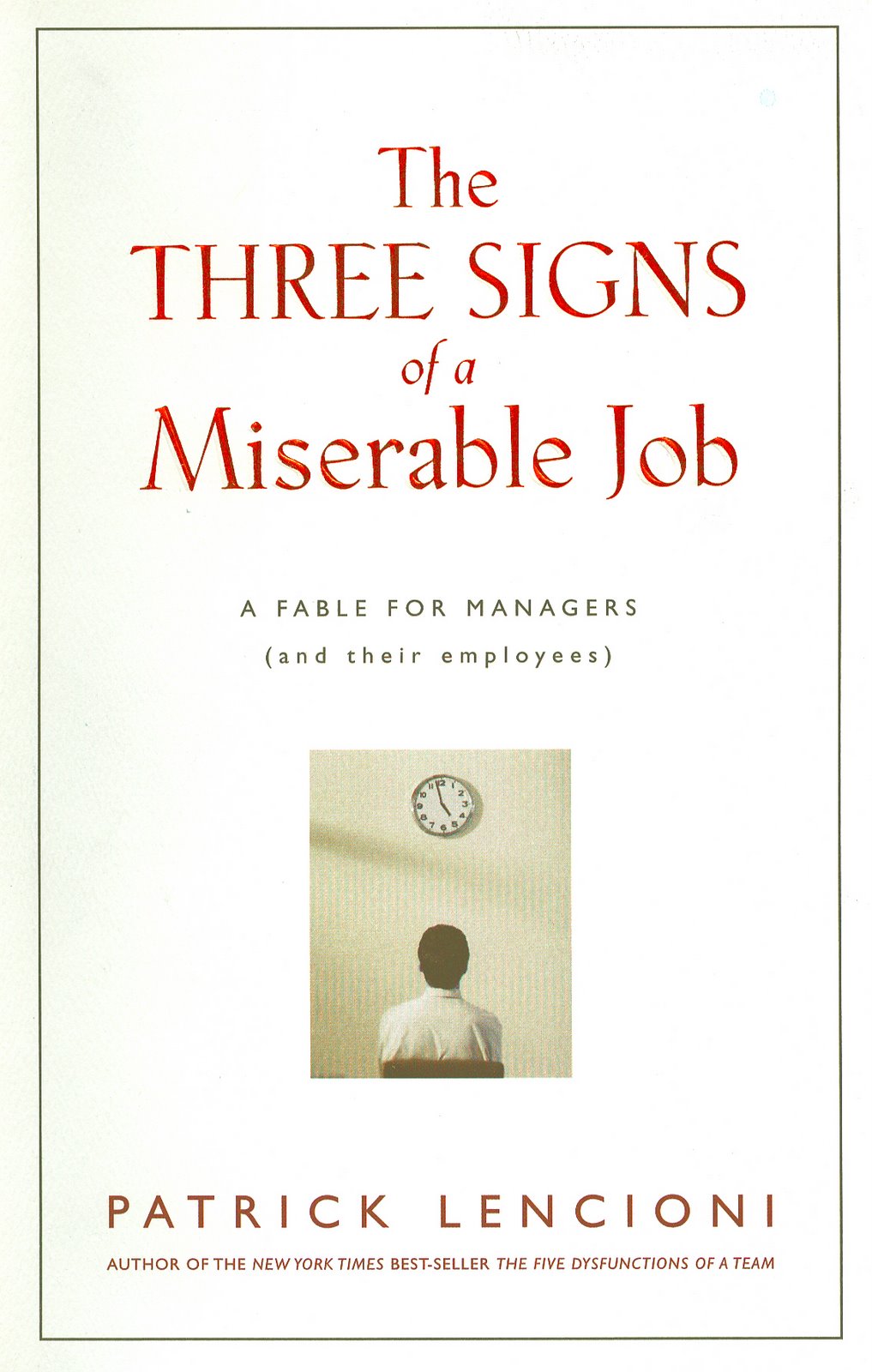
When I received a review copy of “The Three Signs of a Miserable Job” at my office, I was intrigued enough by the title to take it home with me and let it set up shop on my nightstand. That night, as I flipped through and saw that it was written as a fable rather than in a stodgy, “business-y” kind of way, I started reading.
I was quite surprised, a couple of bleary-eyed hours later, to find that I had torn through half of the 272-page book in one night. Yes, that’s right, I tore through a business book.
Because author and business consultant Patrick Lencioni wrote the book as a fable (a story about a regular guy and his career), it’s easy for anyone to read and understand (you don’t need to be an executive or have an MBA). Anyone who’s been a manager or who has been managed, or mismanaged as the case may be, will enjoy the tale of the fictional character Brian Bailey’s career.
Owner of a management consulting business and author of New York Times bestseller “The Five Dysfunctions of a Team,” Lencioni relates the tale of the likable self-made Bailey, who goes from CEO of a fitness company to manager of a pizza shop in a matter of months. He finds that his theory of management, that managers can make a difference in how employees feel about their work, applies at both corporate and the small business levels.
A miserable job, according to Lencioni, differs from a bad job, which is in the “eye of the beholder,” because it’s “one that makes a person cynical and frustrated and demoralized when they go home at night. It drains them of their energy, their enthusiasm and their self-esteem. Miserable jobs can be found in every industry and at every level.”
In fact, studies have shown job dissatisfaction rates as high as 77 percent. Perhaps that’s part of the reason why Lencioni’s book quickly made the New York Times, Wall Street Journal, and BusinessWeek bestseller lists after being released in August 2007.
“Even employees who are well paid, do interesting work and have great autonomy cannot feel fulfilled in a job if their managers are not providing them with what they need on a daily or weekly basis,” he said.
Lencioni’s “three signs” of a miserable job — irrelevance, immeasurement and anonymity — aren’t in themselves compelling, but illustrated with examples over the course of one man’s career, they come alive. Anonymity, he says, is the feeling an employee has when they discover their manager doesn’t relate to them as a human being and has no interest in knowing them on other levels. Irrelevance, according to Lencioni, is avoided by taking the time to help people understand that their jobs matter to someone. Immeasurement, Lencioni said, is when employees don’t know how to gauge their progress in their daily tasks.
“Basically, a job is bound to be miserable if it doesn’t involve measurement,” Lencioni writes. “I’m not talking about feedback from a person, like an attaboy or attagirl. That’s something else. I’m talking about objective evidence that tells you you’re doing something right. Even supposedly exciting jobs get old when you’re doing something right.”
This book is interesting and thought-provoking — it makes you think about your own work situation, be it good or bad. It makes you think about how the way you’re managed affects the way you feel fulfilled — or unfulfilled — by what you do.
If you are a manager, the book might make you think about what you can do to motivate your employees, and to ultimately help your business.
“Most people really do want to be good managers,” Lencioni states. “By helping people find fulfillment in their work, and helping them succeed in whatever they’re doing, a manager can have a profound impact on the emotional, financial, physical and spiritual health of workers and their families.”
If anything, the book encourages you to take a look at your relationships at work. It brings to mind past relationships with bosses or employees that didn’t quite work, and offers a stab at why that was. This quick read is relevant to anyone who works, be that a cashier in a retail store or a corporate bigshot.